
Bread is more than just food in the Philippines; it’s a culture. From the early morning aroma of fresh Pan de Sal to the afternoon Ensaymada snacks, the bakery business remains one of the most stable and profitable ventures for Filipino entrepreneurs.
However, moving from a home kitchen to a commercial bakeshop requires more than just a good recipe. It requires the right strategy and, most importantly, the right equipment. In this guide, we’ll walk you through the essential steps to launch your bakery business in the Philippines.
1. Understand the Local Market Demand
Before buying your first bag of flour, decide what kind of bakery you want to run.
- Neighborhood Bakeshop: Focuses on high-volume, affordable staples like Pan de Sal, Monay, and Spanish Bread.
- Specialty Pastry Shop: Focuses on cakes, cupcakes, and premium pastries for birthdays and events.
- Community Supply: Supplying local “sari-sari” stores with pre-packed bread.
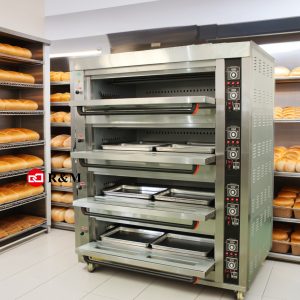
A Commercial Industrial Oem Low Price Electric Gas Baking Oven for Bread and Cake 4 Deck Layer 16 Tray Commercial Bakery Machine
2. Legal Requirements in the Philippines
To operate legally and build trust with your customers, you need to clear the following:
- DTI Registration: For sole proprietorships.
- Mayor’s Business Permit: From your local LGU.
- BIR Registration: For tax compliance and issuing official receipts.
- FDA Permit: Critical if you plan to distribute your bread to other stores or supermarkets.
3. Essential Bakery Equipment List for PH Bakeshops
The secret to consistent quality and low labor costs is commercial-grade machinery. For a standard Filipino bakery, you should prioritize these four machines:
A. Heavy-Duty Dough Mixer
In the Philippines, bread dough like Pan de Sal is dense. A Spiral Dough Mixer is essential to ensure the gluten is developed perfectly without overheating the motor.
B. Commercial Deck Oven (Gas or Electric)
Most local bakers prefer Gas Deck Ovens because they offer lower operating costs given the high electricity rates in the Philippines. Our R&M Gas Deck Ovens provide even heat distribution for that perfect golden crust.
C. Proofer (Fermentation Cabinet)
While the Philippines is naturally warm, a Proofer allows you to control the humidity and temperature, ensuring your bread rises consistently every single time, regardless of the weather.
D. Dough Moulder or Divider
If you want to scale up, manually shaping every piece of bread is too slow. A Dough Moulder will help you produce hundreds of uniform rolls in minutes.
4. Why Source from R&M Machinery?
With over 16 years of experience, Guangzhou R&M Machinery Co., Ltd. has been a trusted partner for hundreds of bakers across Southeast Asia.
- Factory Direct Prices: Cut out the middleman and save your startup capital.
- Durable for Tropical Climates: Our machines use high-grade stainless steel to resist rust and humidity.
- Fast Shipping to PH: Located in Guangzhou, we are strategically close to major Philippine ports like Manila, Cebu, and Davao, ensuring lower shipping costs and faster delivery.
Conclusion
Starting a bakery in the Philippines is a rewarding journey that serves the heart of the community. By combining your passion for baking with professional-grade equipment, you set your business up for long-term success.
Ready to get your quotation?
Contact our team today to get a customized package for your Philippine bakeshop!